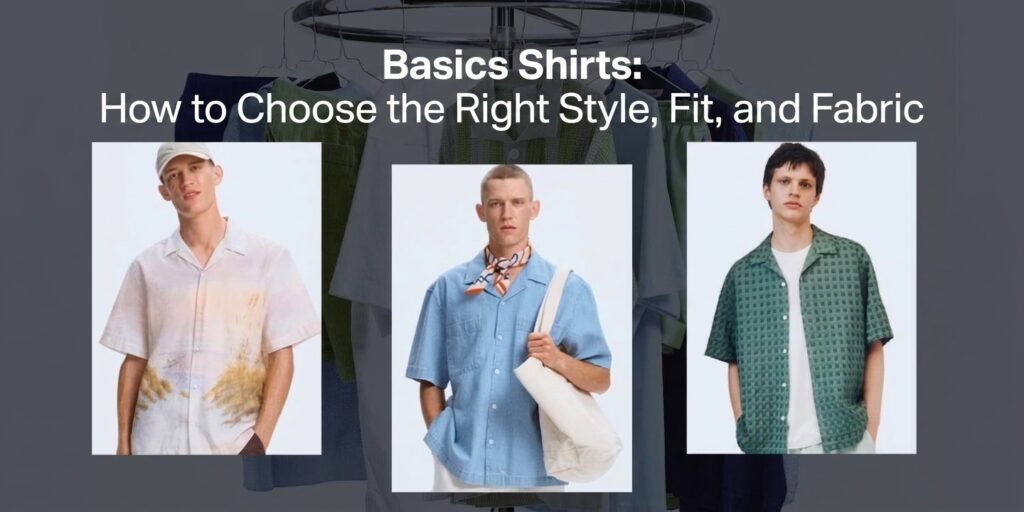

A good wardrobe does not have to be complicated. A few versatile pieces can make everyday dressing easier, and Basics shirts are among the most useful options because they can work across casual outfits, layered looks, travel wardrobes, and some smart-casual settings.
However, choosing the right shirt involves more than selecting a color or buying the lowest-priced option. Style affects how the shirt fits into an outfit, while fit influences appearance and movement. Fabric also matters because different fibers, constructions, weights, and finishes can produce different wearing characteristics. Cotton, linen, polyester, and blended fabrics are not interchangeable, and the same fiber can perform differently depending on how it is made into a fabric.
What Are Basics Shirts?
It is simple, versatile shirt styles intended to work as regular wardrobe pieces. They can include T-shirts, polo shirts, button-up shirts, long-sleeve shirts, and relaxed or oversized designs.
The word “basic” does not necessarily mean plain, cheap, or low quality. Instead, it usually describes a garment that is relatively simple and easy to combine with other clothing. A basic shirt can still have different fabrics, fits, colors, and construction details.
When choosing one, consider how it fits into your existing wardrobe. A shirt that works with several pairs of trousers, jeans, or shorts may be more useful than one that only suits a single outfit.
Why Basics Shirts Are a Wardrobe Essential
The main strength of it is versatility. A simple shirt can be worn on its own, combined with casual trousers, or used underneath another layer.
This makes basics useful when you want more outfit choices without constantly buying new clothing. A small collection of well-selected shirts can cover different situations if the styles, colors, and fabrics match your lifestyle.
Versatility is especially useful when traveling or building a smaller wardrobe. Instead of packing a separate shirt for every outfit, you can choose pieces that coordinate with several garments.
What Makes a Good Basics Shirt?
A good basic shirt should suit the way you intend to wear it. Start with the fit and comfort, then consider fabric, construction, color, durability, and care requirements.
Fabric deserves particular attention. Fiber content alone does not determine how a shirt will feel or perform. Fabric construction and finishing can influence properties such as moisture management, breathability, drying behavior, and durability.
For that reason, evaluate the whole garment rather than assuming that one material or one price point automatically makes a shirt better.
Different Types of Basics Shirts

Basic T-Shirts
T-shirts are one of the simplest everyday clothing options. Their straightforward design makes them easy to wear with jeans, chinos, shorts, jackets, and overshirts.
When choosing a T-shirt, consider the neckline, sleeve length, body length, fabric weight, and fit. A slim T-shirt creates a different silhouette from a regular or relaxed version.
For a practical wardrobe, Basics shirts in uncomplicated designs can provide a strong foundation because they can be worn alone or underneath other clothing.
Polo Shirts
Polo shirts have a collar and typically feature a short opening with buttons or another fastening. This gives them a different appearance from a standard T-shirt.
They can work for casual and some smart-casual situations, depending on the design, fabric, fit, and setting. A simple polo in a versatile color can therefore add variety without making the wardrobe overly complicated.
Button-Up Shirts
Button-up shirts can provide a more polished appearance while remaining versatile. Their suitability depends on the fabric, collar, pattern, fit, and overall design.
A simple button-up can be combined with jeans for a casual outfit or with chinos or trousers for a more refined appearance. Plain or subtly colored versions are often easier to integrate into a basic wardrobe.
Long-Sleeve Shirts
Long-sleeve shirts provide additional coverage and can be useful in cooler conditions or as part of a layered outfit.
The fabric matters here. A lightweight long-sleeve shirt may work as a standalone piece in mild weather, while a heavier version can become part of a cooler-weather layering system.
Relaxed and Oversized Shirts
Relaxed and oversized shirts are related but not identical. A relaxed shirt is generally designed with more room, while an oversized garment intentionally creates a larger silhouette.
Do not confuse an oversized design with simply buying a shirt several sizes too large. If you want a particular oversized appearance, choosing a garment designed with that silhouette can produce more balanced proportions.
How to Choose the Right Style of Basics Shirts
Consider Your Lifestyle
Your lifestyle should be one of the first things you consider. Someone who spends most days in casual clothing may get more value from T-shirts, while someone who attends smart-casual events may prefer polos or button-up shirts.
Think about work, travel, weekends, social occasions, and everyday activities. Buying a shirt for a lifestyle you do not actually have can leave it sitting unworn.
Think About Versatility
Before buying Basics shirts, consider how many outfits you can create with them. A simple shirt that works with several pairs of trousers and different layers can be more practical than a distinctive design that only works with one combination. This does not mean every shirt needs to be neutral, but your wardrobe should contain enough adaptable pieces to support regular use.
Choose a Style That Fits Your Personal Look
Your wardrobe should reflect your preferences. Some people prefer fitted clothing, while others feel more comfortable in relaxed silhouettes.
Trends can provide inspiration, but they should not determine every purchase. If a particular style does not feel comfortable or does not suit the way you normally dress, it may not be a useful wardrobe basics.
Consider When and Where You Will Wear It
Think about the setting before buying. A shirt for a relaxed weekend does not necessarily need the same design as one intended for an office or social event.
Climate, activity level, and formality can all influence the choice. The more clearly you understand the intended use, the easier it becomes to select the right shirt.
How to Choose the Right Fit for Basics Shirts
Understanding Slim, Regular, Relaxed, and Oversized Fits
Slim fits generally sit closer to the body. Regular fits provide a more conventional amount of room, while relaxed fits offer additional ease. Oversized styles intentionally create a larger silhouette.
Brand sizing is not always consistent, so the label alone should not determine your choice. When possible, compare actual garment measurements with a shirt you already own that fits well.
Check the Shoulder Fit
The shoulder area is an important part of a shirt’s overall appearance. If the shoulder seam sits far beyond your natural shoulder, the garment may look oversized even if the rest of the shirt fits.
For a more precise comparison, use the manufacturer’s garment measurements rather than relying only on small, medium, or large labels.
Check the Chest and Body
The chest should allow natural movement without excessive pulling. At the same time, too much extra fabric can make the shirt look unnecessarily loose.
Try moving your arms and upper body when checking a shirt. The goal is a fit that supports normal movement while maintaining the silhouette you want.
Pay Attention to Sleeve and Shirt Length
Sleeve and body length influence the proportions of the entire outfit. A shirt that is too short may not provide the intended coverage, while excessive length can change the silhouette.
If you are buying online, compare the listed body and sleeve measurements with a shirt that already fits you well.
Prioritize Comfort and Movement
A good fit is not only about appearance. If a shirt restricts movement, feels uncomfortable, or becomes difficult to layer, you are less likely to wear it regularly.
The best Basics shirts should fit naturally into your daily activities rather than requiring you to constantly adjust them.
How to Choose the Right Fabric for Basics Shirts
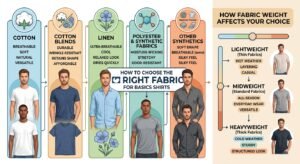
Cotton
Cotton is widely used in clothing and is valued for its familiar feel and moisture absorption. However, cotton garments can behave differently depending on fabric construction, finishing, and weight.
CottonWorks notes that fabric performance can be modified through textile technologies and construction, including approaches designed to change moisture movement and drying behavior.
For everyday Basics shirts, cotton can be a practical choice when comfort and familiar fabric feel are priorities.
Cotton Blends
A cotton blend combines cotton with another fiber. The reason for blending can vary, but it may be used to change properties such as stretch, durability, drying behavior, or fabric feel.
Do not assume that every blend performs the same way. Check the fiber percentages and consider the shirt’s intended use, weight, construction, and care requirements.
Linen
Linen is particularly associated with warm-weather clothing because of its breathability and moisture-related properties.
The Alliance for European Flax-Linen & Hemp reports that linen demonstrated strong ventilation and breathability in comparative testing and can allow substantial airflow through fabric.
Linen can also crease more visibly than some other fabrics, so that natural texture should be considered part of the style rather than automatically treated as a defect.
Polyester and Synthetic Fabrics
Polyester is a synthetic fiber used across many clothing categories. Depending on the fabric construction and intended application, polyester garments can offer characteristics such as durability, moisture management, or faster drying.
REI’s layering guidance includes polyester among materials used in base layers and notes differences in wicking, drying, odor retention, and durability between materials.
For Basics shirts, synthetic fabrics may therefore be useful when particular performance characteristics matter.
How Fabric Weight Affects Your Choice
Fabric weight is another factor to consider. Lightweight fabrics may be more comfortable in warm conditions, while heavier fabrics can provide greater coverage and work well in cooler environments.
However, fabric weight should not be treated as a quality score. The right weight depends on the climate, activity, layering system, and personal preference.
How to Choose the Best Color for Basics Shirts
White Basics Shirt
White is a practical starting color because it can coordinate with many other colors. It can work with jeans, chinos, shorts, and darker trousers.
The main drawback is practical rather than stylistic: lighter colors can show stains more easily, so consider your lifestyle and care habits.
Black Basics Shirts
Black creates a simple and understated appearance. It can be combined with many neutral colors and can work for both casual and more polished outfits depending on the rest of the clothing.
If you frequently wear dark trousers or jackets, black can also provide a consistent foundation for monochromatic outfits.
Gray and Navy Basics Shirt
Gray and navy add variety while remaining relatively easy to coordinate. They can be useful alternatives when you want something different from black and white without moving toward highly distinctive colors.
Neutral and Earth-Tone Basics Shirts
Beige, cream, olive, and brown can introduce more color while maintaining a relatively understated appearance.
These shades can be particularly useful when your existing wardrobe already contains many black, white, and gray pieces.
Choosing Colors That Work With Your Existing Wardrobe
Instead of asking which color is universally best, look at what you already own. The most useful Basics shirt are usually the ones that create several combinations with your existing jeans, trousers, shorts, jackets, and shoes. A color that looks good by itself is less useful if you rarely have anything to wear with it.
How to Style Basics Shirts for Everyday Outfits
Basics Shirt With Jeans
A basic shirt and jeans create a straightforward casual combination. The final appearance depends on the shirt’s fit, color, footwear, and any additional layers.
A regular-fit shirt creates a different look from an oversized one, so choose proportions that match your preferred style.
Basics Shirt With Chinos
Chinos can make a simple shirt combination look more polished without becoming formal. A clean-fitting shirt in a suitable color can work well for many smart-casual situations.
The goal is balance: the shirt should not look excessively formal or overly relaxed compared with the trousers and footwear.
Basics Shirt With Shorts
For warm-weather casual dressing, a simple shirt and shorts combination can be practical. Lightweight fabrics and comfortable fits can be useful when temperatures are high.
REI notes that warm-weather clothing can benefit from moisture management and suitable fabric choices, particularly during activity.
Layering Basics Shirts
Layering gives you more control over comfort as conditions change. REI describes a layering system in which different garments serve different purposes, including moisture management, insulation, and weather protection.
A basic shirt can serve as a foundation under an overshirt, sweater, jacket, or other layer. Make sure each layer provides enough room for natural movement.
Dressing Up a Basic Shirt
A simple shirt does not have to look overly casual. Trousers, footwear, outerwear, and accessories can change the overall appearance.
Instead of buying a highly decorative shirt for every occasion, you can sometimes create different looks by changing the pieces worn around a simple shirt.
Basics Shirts for Different Seasons
Choosing Shirts for Warm Weather
Warm-weather choices should consider breathability, fabric weight, moisture management, and fit.
Linen is one option because documented testing has shown strong airflow and breathability characteristics. Lightweight cotton can also be useful, while certain synthetic fabrics are designed specifically for moisture management and drying.
Choosing Shirts for Cooler Weather
In cooler conditions, a shirt can become one layer within a larger clothing system. REI recommends layering garments so that layers can be added or removed as conditions and activity levels change.
A heavier shirt or a lightweight shirt combined with another layer can therefore be more useful than relying on one garment for every temperature.
Transitional Weather
Spring and autumn can involve changing temperatures throughout the day. Layering makes it easier to adapt without completely changing an outfit.
A lightweight shirt can act as a foundation, with an overshirt, sweater, or jacket added when temperatures drop.
How to Tell if a Basics Shirts Is High Quality
Examine the Fabric
Look at the fabric’s feel, weight, construction, and intended purpose. Fiber content is useful information, but it does not tell the complete story.
Textile performance can involve multiple measurable properties, and construction and finishing can affect how a fabric behaves.
Check the Stitching and Seams
Examine whether stitching looks consistent and whether seams are finished appropriately for the garment.
Do not judge quality from one stitch or seam alone. Consider the complete construction of the shirt.
Inspect the Collar, Cuffs, and Hem
Collars, cuffs, and hems are areas worth checking because they contribute to the shirt’s appearance and are frequently handled. Look for clean finishing and a construction that matches the intended design.
Consider Shape Retention and Durability
A shirt’s long-term usefulness depends on materials, construction, finishing, how often it is worn, and how it is cared for.
Avoid assuming that a particular fiber automatically guarantees durability. The finished garment matters more than the fiber name alone.
Compare Quality With Price
Price should be considered alongside quality rather than used as a shortcut for judging it.
When comparing Basics shirts, look at the fabric, construction, fit, versatility, expected use, and care requirements. A more expensive shirt is not automatically a better purchase.
Common Mistakes to Avoid When Buying Basics Shirts
Choosing the Wrong Fit
Do not rely entirely on size labels. Compare actual measurements when possible, especially when buying online.
Ignoring the Fabric
Think about climate and intended use before choosing a material. A fabric that works well for one situation may be less suitable for another.
Buying Only Based on Price
Low price does not necessarily mean poor quality, and high price does not automatically mean excellent quality. Evaluate the garment itself.
Choosing Too Many Difficult-to-Match Colors
Interesting colors can add personality, but your core wardrobe should contain enough versatile shades to create multiple outfits.
Ignoring Care Requirements
Care requirements can affect how practical a shirt is for you. A garment that requires special handling may not be convenient if you prefer simple laundry routines.
Following Trends Instead of Your Actual Needs
Fashion trends can change quickly. If your goal is to build a dependable wardrobe, prioritize clothing that you expect to wear repeatedly.
How to Care for Basics Shirts
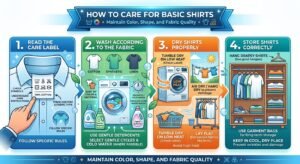
Read the Care Label
Care labels are important because they provide instructions for maintaining textile garments. In the United States, the FTC’s Care Labeling Rule requires covered manufacturers and importers to provide regular care instructions for covered apparel.
Wash According to the Fabric
Follow the instructions supplied with the individual garment. Different fabrics and constructions can have different care requirements. Avoid assuming that every cotton shirt, linen shirt, or polyester shirt should be washed in exactly the same way.
Dry Shirts Properly
Drying instructions are part of the garment’s care information. The FTC rules specify that covered care instructions should address appropriate drying methods when applicable. Following those instructions can help you avoid unnecessary damage from unsuitable drying temperatures or methods.
Store Shirts Correctly
Store shirts in a way that suits their construction. Many T-shirts can be folded, while structured shirts may be easier to keep on appropriate hangers. The goal is to avoid unnecessary stretching, crushing, or distortion.
Maintain Color, Shape, and Fabric Quality
Regularly following the manufacturer’s care instructions is one of the simplest ways to maintain clothing. Pay particular attention to washing temperature, drying instructions, ironing requirements, and warnings on the care label.
How Many Basics Shirts Do You Really Need?
There is no scientifically established number of Basics shirts that every person needs. The right quantity depends on lifestyle, climate, work requirements, laundry frequency, and personal preference.
Someone who wears a shirt every day may need more options than someone who wears shirts only on weekends. Someone living in a hot climate may also rotate shirts more frequently.
A practical approach is to begin with the styles you wear most often. You might choose several versatile colors, then add different fabrics or sleeve lengths according to the seasons.
The goal is not to own as many shirts as possible. It is to have enough useful options for your actual routine without filling your wardrobe with pieces you rarely wear.
Read more: Clawford Lakes Resort and Spa A Relaxing Getaway
Are Basics Shirts Worth Buying?
Basics shirts can offer strong practical value when they match your lifestyle and wardrobe.
Versatility: Simple shirts can work with several types of trousers, shorts, and outer layers.
Comfort: Comfort depends on the combination of fit, fabric, construction, climate, and activity. Choosing the right combination is more useful than assuming one material is always best.
Frequency of Use: A shirt that you wear regularly can justify its place in your wardrobe more easily than an item that is rarely used.
Ease of Styling: Simple designs can make outfit coordination easier, especially when the colors work with your existing clothing.
Durability: Durability depends on the complete garment and how it is used and maintained. Appropriate care can help preserve its condition over time.
Personal Wardrobe Needs: Ultimately, the value of Basics shirts depends on your own requirements. Consider where you live, what you wear, how often you do laundry, your budget, and the styles you genuinely enjoy.
Final Thoughts on Choosing the Right Basics Shirts
Choosing the right shirt becomes easier when you focus on how the garment will actually fit into your life.
Start with style: choose designs that suit your routine and the occasions where you will wear them. Then evaluate fit, paying attention to shoulders, chest, sleeves, length, and comfortable movement. After that, consider fabric, remembering that fiber content is only one part of how a finished textile behaves.
For warm weather, breathability and moisture management may be important considerations, while cooler conditions may make layering and fabric weight more relevant.
Finally, think about color, construction, price, care requirements, and how frequently you expect to wear the shirt. The best Basics shirts are not necessarily the most expensive or trendiest.